Showing posts with label outsider art. Show all posts

Saturday, August 29, 2026

Send in the Schizoid Kid: A Life Observed From the Outside


Send in the Schizoid Kid: A Life Observed From the Outside

I found out I had Schizoid Personality Disorder by accident. I was fifteen years old, sitting in the waiting room of my psychiatrist's office. His door was open, and I heard him tell his secretary, “Send in the schizoid kid.” That was me.

Like most people who hear the word schizoid, particularly a fifteen-year-old in the early 1980s, I thought it meant schizophrenia. Nobody sat me down and explained the diagnosis. Nobody gave me a pamphlet describing what it might mean for the rest of my life. There was no internet to consult when I got home. There wasn't even much of a popular vocabulary for discussing these things. The diagnosis would not be formally revealed to me until decades later, when that same psychiatrist testified during my disability hearing and confirmed that Schizoid Personality Disorder was indeed what he had diagnosed me with as a teenager. By then I had already spent most of my life living it.

Cover of Submerged Structure by Thomas L. Vaultonburg


Schizoid Personality Disorder is a strange diagnosis partly because its defining characteristics involve absences: little desire for close relationships, preference for solitary activities, apparent indifference to praise or criticism, emotional detachment. Years ago, when writing about my book Submerged Structure, I described it as a disorder involving something missing, complicated by the fact that the person missing it may not miss it—or may not know exactly what he is supposed to be missing.

I don't know if I would describe it exactly that way today. One of the difficulties in writing about something you've lived with for more than forty years is distinguishing the condition from the person. Which parts are symptoms? Which are adaptations? Which are simply personality? Which resulted from experiences that had nothing to do with a psychiatric diagnosis at all? After this long, I don't know where one ends and another begins.

What I do know is that much of my life has felt like an exercise in observation. When I was younger, I consciously practiced behaviors other people appeared to perform automatically. Eye contact. Smiling. Shaking hands. Even walking correctly could become something to think about rather than simply something to do. I watched people and tried to determine what was expected of me. Years later I described this process as translation. Life required continually translating myself into a persona comprehensible to people who had never needed to consider that the social language they spoke naturally might be a foreign language to somebody else.

Then, in 1987, Star Trek: The Next Generation appeared on television. My favorite character was Lieutenant Commander Data. Data was an android. He was intelligent, capable and sentient, but he lacked human emotions and was fascinated by them. He observed the people around him. He studied their behavior. He attempted humor. He tried to understand friendship, affection, grief and all the strange contradictions humans accepted without seeming to notice them. I identified with him immediately. I wasn't an android trying to become human, obviously, but emotionally the metaphor was almost embarrassingly accurate. Data was doing consciously what everyone around him did instinctively. I knew something about that.

Today there is an enormous vocabulary surrounding experiences that barely had a public vocabulary when I was fifteen. Neurodivergence. Autism spectrum disorder. Masking. Sensory processing. Social communication differences. Spend a few minutes online and you can find thousands of people discussing experiences that previous generations might never have described publicly.

I don't know exactly what to make of it. When I later went to college and studied psychology, the profession seemed considerably more confident about these categories and their prevalence. Certain disorders affected a certain percentage of the population. Diagnostic categories had boundaries. At least that was the impression presented to students. Now reported diagnoses of autism spectrum disorder have increased enormously, and people publicly identify themselves as neurodivergent in numbers that would have seemed astonishing when I was young.

Why? I don't know. Diagnostic criteria have changed. Awareness has changed. Parents and teachers know what to look for. People who once would have gone undiagnosed can now be recognized. Stigma has changed. Self-reporting has changed. Whether those explanations account for everything, or whether something else is happening as well, isn't something my own experience qualifies me to decide. Nor do I know what diagnosis I would receive if I were fifteen years old today.

That question interests me, but I don't want to rewrite my life using terminology that didn't exist when I lived it. Schizoid Personality Disorder and autism are not interchangeable diagnoses. I can't travel back forty years with today's diagnostic manuals and today's understanding of neurodevelopment and submit the fifteen-year-old version of myself for reassessment. All I can report reliably is what the experience looked like from inside.

Increasingly, though, I can see what it did to my work. For years I made a distinction between the Outlaw artist and the Outsider artist. The Outlaw understands the rules and deliberately breaks them. The Outsider may never have understood why the rules existed in the first place. I once fancied myself an Outlaw. Eventually I began to suspect I had been an Outsider all along.

That distinction changed how I understood my poetry. Much of my writing has involved looking at ordinary human behavior as though it weren't ordinary. Customs, relationships, ambitions, status, work, sex, religion, death, possessions—the peculiar machinery of being human becomes visible when you aren't completely absorbed in operating it. Eventually that same observational habit moved increasingly toward the physical world: birds, roads, weeds, rivers, abandoned buildings, animals, signs and objects people have discarded. The bicycle somebody pulled out of the Rock River. An office chair sitting strangely in a window. Things encountered while walking through Rockford that thousands of other people may have passed without needing to stop.

Haiku turned out to be particularly compatible with that way of experiencing the world. You don't have to explain everything. You notice. That is essentially the method behind Hike You!, the six-year walking and haiku project I've created with photographer Ryan Davis. We walk through the city. We encounter something. Ryan photographs it. I write about it. It sounds almost ridiculously simple. Maybe it is. But I've come to realize that observation has been one of the continuous threads running through my life. When participation isn't automatic, observation becomes unusually important.

The same contradiction appears elsewhere in my work. Someone reading the diagnostic description of Schizoid Personality Disorder might reasonably expect me to have spent my life withdrawing from other people, and certainly I've done plenty of that. Solitude isn't something I tolerate until something better comes along. It is my natural state. Yet I founded Zombie Logic Press. I edited Zombie Logic Review. I've published other writers. I've organized projects. I've participated in Rockford's literary and artistic community. I've collaborated with artists. I've spent years documenting the history and peculiarities of the city where I live. Those things require other people.

The younger version of me once wrote something that is difficult for the older version to dismiss: “I want to be with you. I want to be part of the scene. I want to be human.” I don't think I'd say it quite that way anymore. I no longer believe there is some examination in human behavior I'm required to pass. But I recognize the person who wrote it.

What I've actually done, perhaps without realizing it, is construct alternative methods of participation. Writing is one of them. Publishing is another. Collaboration is another. Walking through a city with a photographer and returning with a poem is another. They allow connection without requiring me to experience connection exactly the way someone else does.

That brings me back to Submerged Structure. There used to be a sign along Route 72 between Byron and Oregon, Illinois, beside the Rock River. I saw it repeatedly when I was young. It read SUBMERGED STRUCTURE, warning that something was underneath the water. You couldn't see it from the surface, but it was there and needed to be accounted for. I couldn't stop thinking about those words. Eventually they became the title of a book.

At the time, I thought the sign was a nearly perfect metaphor for Schizoid Personality Disorder. Something was submerged within me. Maybe it had broken away. Maybe it had never developed. Maybe it remained somewhere inaccessible beneath the surface. Other people couldn't see it, and I couldn't adequately explain it. I am less certain now that anything needs to be recovered. That's one of the things forty years can change.

I don't know whether today's explosion in the language of neurodivergence will ultimately make these experiences easier for younger people. I hope it does. I hope a fifteen-year-old sitting in a psychiatrist's waiting room today doesn't have to accidentally overhear what someone has decided is happening inside his own mind. I hope somebody explains it to him. I hope he gets to ask questions. And I hope he understands that a diagnosis may describe something important about him without necessarily providing the definitive explanation of who he is.

I don't have a program to offer people with Schizoid Personality Disorder, autism spectrum disorder or any of the other conditions we now gather beneath an expanding vocabulary of human neurological difference. I'm barely able to understand my own experience. But I have forty years of evidence: poems, books, photographs, strange little observations about human behavior, publishing projects, collaborations and walks through Rockford. There is a book called Submerged Structure. There is even an old poem called “Away Message,” in which I imagined myself in geosynchronous orbit around a lost moon of Jupiter—present, but very far away.

Maybe that's what my work has been doing all this time: sending messages from wherever I am. I don't know whether someone younger, newly diagnosed or simply struggling to understand why the world seems to operate according to rules everyone else received in advance will find anything useful in those messages. I hope so. I can't give them a map, but after forty years of wandering around out here, I can leave a few signs.

Pin It

Sunday, August 16, 2026

The Most Dada Art Exhibit Ever: The Time I Wrote About Dog Shit on the Walls of the Rockford Art Museum


The Most Dada Art Exhibit Ever: The Time I Wrote About Dog Shit on the Walls of the Rockford Art Museum

In 2017 I spent two days writing children's poems by hand on the walls of the Rockford Art Museum. All twenty-six of them.

I had a large box of expensive art markers supplied by the museum, and I tried to choose a color for each poem that worked visually with the illustration beside it. Sometimes this involved careful consideration of color, balance, and the relationship between text and image. Sometimes the decision was easier. “D is for Dog Poop” was written in brown. “U is for Urination” was written in yellow.

D is for dog poop from Atrocious Poems From A To Z by Vaultonburg and Matthews


Nobody threw me out. I had permission.

In fact, this was part of Bittersweet Observations, a perfectly legitimate exhibition at a respected American art museum. There were framed illustrations by Jenny Mathews, other artists exhibiting serious work, museum staff, visitors, children, programming, a curator, and all the usual machinery of an actual museum exhibition. And right in the middle of it was a grown man writing about dog shit on the wall in brown marker.

I thought it was one of the great Dada art moments of all time. I still do.

The Dadaists Had It Easier

The Dadaists announced they were doing Dada. That's cheating.

If you walk into an exhibition that announces itself as Dada, you are prepared for Dada. Someone can put a urinal in the gallery and everyone strokes their chin because Marcel Duchamp has already explained the rules. I had a better opportunity. I could sneak Dada into a straight art exhibition. For kids.

I didn't set out to mock the museum or the people involved. I genuinely admired the Dada and Surrealist traditions, and I realized there was an opportunity here to combine two things that, as far as I knew, had not often been combined: children's literature and Dada.

The idea of writing the poems directly onto the museum walls was mine from beginning to end. I realized that if I could get them to say yes, the gates were open. They said yes. I'm not entirely convinced they thought through the implications.

I had.

U is for Urination from Atrocious Poems A To Z by Vaultonburg and Matthews


The Monster Dictionary

The story actually began almost forty years earlier at Mary Morgan Grade School in Byron, Illinois, where in fifth grade we were assigned to write and illustrate a children's book. One might assume that a future poet and publisher would have attacked this assignment with enthusiasm. One would be wrong.

I procrastinated until two days before the deadline. At that point, having few interests that didn't involve baseball or monster movies, I decided an alphabet book would be the easiest possible solution. Twenty-six letters. Fill in the blanks. Draw some pictures. Turn it in. I called it The Monster Dictionary.

My teacher gave me a B and wrote:

“Not colored. Excellent ideas! if you would have put more effort into this project; the school could have sent this idea on to the Library of Congress.”


I found someone to color it. 

I later preserved her questionable semicolon for historical authenticity.

That note bothered me for decades. Not enough to become industrious, necessarily, but enough that the unfinished business remained.

Around age forty I was the general manager of Castaways, a dive bar underneath a bridge on the Rock River in Rockford. Among the people I met there was Jenny Mathews, one of the early members of the Rockford Rage Roller Derby. I asked Jenny if she'd be interested in illustrating a children's alphabet book about all the things kids hate. The working title was Atrocities From A to Z.

She said yes. I sent her the first poem, and she sent back an illustration. It was perfect.

Then she moved to Texas. We made another children's book long-distance while Atrocities went onto the back burner. Jenny eventually came back from Texas, we became a couple, and a scant eight years later the book was finished.

By then it was called Atrocious Poems A to Z. The finished book was written by me, illustrated by Jenny Mathews, published by Zombie Logic Press, and printed in Michigan by Edwards Brothers Malloy. It was a real children's book, despite considerable evidence to the contrary.

Things Kids Love to Hate

The premise was simple: children experience atrocities every day. Adults don't recognize most of them as atrocities because we've forgotten what it feels like to be a child. Vegetables, haircuts, inoculations, bullies, sharing, liver, monsters, having siblings, stepping in dog poop, needing to pee at an inconvenient time. These things are ordinary to adults. To children they can temporarily assume the proportions of Greek tragedy.

That was the joke, but we took the premise seriously. The poems were intended to give children and adults a funny way into conversations about anxiety, bullying, sharing, fear, embarrassment, and the various indignities involved in being small and having larger people control much of your existence. I also worked lessons about poetry into the book: haiku, limerick, rhetorical questions, visual poetry, personification, oxymoron, portmanteau, and other literary forms and devices.

It was silly. It wasn't unserious. That distinction matters.

Twenty-Six Poems and One Very Cold Museum

Installing the exhibition was considerably less whimsical than looking at the finished wall might suggest. It was around 100 degrees outside. Inside the museum it was cold. Museums have to maintain conditions suitable for preserving artwork, which does not necessarily mean conditions suitable for a middle-aged poet spending two days handwriting an entire book vertically on a wall.

I had badly underestimated how long it would take. All twenty-six poems had to be written by hand beside Jenny's illustrations. My hands and arms became exhausted. I did yoga on the museum floor to keep myself loose enough to continue.

Meanwhile, people were working around me because the total installation involved creating a small forest inside the museum. I would periodically stop writing and help with other parts of the installation, partly because they needed help and partly because my body needed a break from writing on the wall.

I knew the exhibition would remain up for approximately three months. Potentially tens of thousands of people were going to walk past these words, which adds a certain pressure to penmanship. But living with a visual artist had taught me one of the great truths of art: anything can be painted over.

I believe I did make a mistake somewhere and part of the wall had to be repainted so I could do it again. I no longer remember which letter or what I screwed up. Nothing is permanent. Especially in a museum.

Brown

The museum held art classes, so there was an impressive assortment of markers available. I didn't simply alternate colors mechanically. I tried to look at Jenny's illustration, consider the neighboring pieces, stand back from the wall, and choose something that made the installation work visually as a whole.

Some choices were intuitive. Some were literal. “O is for Orange” presented few conceptual difficulties. Neither did Dog Poop. Brown. Urination? Yellow.

There was no manifesto explaining this. No wall text announced that the use of brown interrogated bourgeois assumptions regarding canine waste. I picked brown because dog poop is brown. I picked yellow because pee is yellow. Then I continued working.

This, to me, is the crucial difference between what happened at Bittersweet Observations and a deliberately advertised Dada exhibition.

Nobody had been warned.

The Kids Got It

The children seemed to understand the work immediately. Of course they did. They didn't require anyone to explain the premise that stepping in dog poop could constitute a catastrophe. They were still close enough to childhood for the scale of these events to make intuitive sense.

Some older visitors seemed to need permission. You could almost see the process occurring: Am I supposed to take this seriously? Is this allowed in an art museum?

Yes and no. That was part of the fun.

These were trivial things and these were enormous things. Both propositions could be true at the same time. Children already knew that.


Atrocious Poems A To Z by Vaultonburg and Matthews from Zombie Logic Press

Please Don't List Me

There is another strange part of the story. I asked not to be listed as one of the exhibiting artists.

This wasn't a conceptual gesture. I wasn't making some grand statement about authorship or institutional recognition. I was tired. At that point Jenny and I seemed to be doing three, four, sometimes five public events a week. We were in shows constantly. We were everywhere. I had reached the limit of how much public exposure I wanted. I couldn't find enough corners to hide in.

By the time Bittersweet Observations came around, I wanted to do the work and be left out of the rest. So I asked to be left off the artist listing.

In retrospect, this was a mistake. How many times in your life does a respected American museum invite you to write juvenile thoughts directly onto its walls?

My bad.

The absurdity becomes more apparent in photographs from the exhibition. There I am standing beneath an enormous version of my name mounted over the installation. So I managed the nearly impossible feat of having my name displayed prominently across an entire museum wall while simultaneously not being officially listed as one of the artists.

Poet Thomas L. Vaultonburg at the Bittersweet Observations show at Rockford Art Museum 2017

A photo of Thomas L. Vaultonburg (duh)me in front of the wall with my 26 handwritten poems at the Bittersweet Observations Show at Rockford Art Museum 2017. Photo by Ryan Davis

Dada could hardly have improved upon this.

I Thought I'd Gotten Away With Something

When I finished the installation, I knew exactly what I thought I'd accomplished. I thought I'd gotten one over on them.

Nearly forty years earlier, my fifth-grade teacher had looked at The Monster Dictionary and told me that if I'd put more effort into it, the school might have sent the idea to the Library of Congress. Now I had taken the descendant of that lazy fifth-grade alphabet book and written the whole thing on the walls of a respected American museum.

I thought that was magnificent. I still think it's pretty good.

But at 57, I see something else. I was so interested in completing my private argument that I didn't fully recognize the public opportunity I'd been given. That was a recurring problem for me. I wasn't failing to make things. I was making things constantly: books, poems, publishing projects, collaborations, blogs, fictional leagues, and private worlds.

What I often neglected was making sure there would be a durable public record that I had made them. I had confused being seen with seeking attention.

They're not the same thing.

Not Colored

There is one detail from my fifth-grade teacher's note that seems considerably funnier now than it did in 1979.

“Not colored.”

That was one of her complaints.

Nearly forty years later I stood inside the Rockford Art Museum with a box full of expensive colored art markers and spent two days correcting the deficiency. I colored it. Dog poop was brown. Urination was yellow. The other twenty-four required varying degrees of aesthetic judgment.

Eventually Bittersweet Observations ended. The exhibition came down. I'm sure the museum was delighted to paint over my poems. Another exhibition went up. I believe it involved motorcycles. I wasn't bothered. I've never had many illusions about permanence in my work. Museums change exhibitions. Walls get painted. One thing disappears so another can occupy the space.

Of course I went to the next show. I was required to be everywhere.

What survives now are photographs, the book, old blog posts, museum records, and memories. One of my contemporary posts about Atrocious Poems A to Z spends considerable time telling the story of my fifth-grade teacher, Jenny, the eight years we worked on the book, the Library of Congress, and the purpose of the poems.

Then, at the very end, I added an update:

“Oh, here's the part I forgot to say: my book ended up on the walls of a major American museum.”

I forgot to mention the museum.

That tells you almost everything you need to know about me at the time.

The Most Dada Art Exhibit Ever

So here is the part I don't intend to forget this time.

In 2017, as part of Bittersweet Observations at the Rockford Art Museum, I spent two days handwriting all twenty-six poems from Atrocious Poems A to Z directly onto the museum walls beside illustrations by Jenny Mathews. It hurt. I did yoga on the museum floor. I made at least one mistake and had to do part of it over. Children understood what we were doing better than some adults did.

I wrote a poem about dog shit in brown marker and a poem about urination in yellow marker. My enormous name appeared above the installation, spelled incorrectly, while I had specifically requested that I not be listed as an exhibiting artist.

I thought I had successfully smuggled Dada into a respectable museum disguised as children's literature.

Maybe I had.

But here's the part my fifth-grade teacher would appreciate. She told me the problem with my first book was that I hadn't put enough effort into it. She told me it wasn't colored.

Nearly forty years later, I spent two exhausting days writing the whole damn thing again on the walls of an American art museum.

In color.

There, Mrs. Liggett. I finished it.

Pin It

Sunday, January 25, 2015

You Are NOT The Proud Owner of a Friedrich Schroder Sonnenstern

Last fall Jenny got a call from her dad that he had gotten a contract to clean out a 10,000 square foot warehouse, and wanted to give her the first chance to see if there was anything there she wanted. I've learned never to ignore the possibility that anything this man does might not turn into an adventure, so I was in. When we got there it was 10,000 square feet. Of ammonia jugs, bleach, curtain rods, water bottles, light bulbs, wire hangers... you see, the man had owned a surplus department store called Insurance Liquidators, and had a couple of decades of junk stockpiled. Now, I like bleach as much as the next guy, so I did grab a few jugs, but after all it only costs a dollar a gallon, so we wondered if it was even going to be worth the drive out there. Jenny's dad was trying to convince her to take all kinds of useless items, and I could see she was getting annoyed with him, so I used the opportunity to sneak off into another part of the warehouse, where I discovered an office. Finally, I thought, if any treasure has been left behind it would surely have been deposited here. Unfortunately, after a few minutes I was unable to unearth anything more interesting than a stack of old country music records. Oak Ridge Boys, Slim Whitman, the obligatory Engelbert Humperdink. Also, it was cold, and the kids were in the car. The treasure hunt had turned into an ordeal. I needed to find something, anything, to justify the drive out there. Then I saw this ...


The art you're looking at at first appears to be polyurethane, or plexiglass. I just thought it was tacky as hell and wanted it immediately for the 70's themed den we are planning downstairs. It also does have a sort of strange appeal, and is not without any artistic merit. But my first assessment was that it was a cheap piece of mass-produced decoration from the 1970's that he had ordered for the store. And it may very well be that. But it is signed. By an artist named Schroder. I put this out of mind for several months, but looking at it again a few weeks ago I vowed  to make a concentrated effort to discover the identity of the artist.

I was initially excited by the possibility that the piece might have been done by Friedrich Schroder Sonnenstern, a German Outsider artist who did work I find very unique and appealing. It fits roughly into his style, but it just wasn't right. I was NOT the proud owner of an original Friedrich Schroder Sonnenstern


Sonnenstern painting
Friedrich Schröder-Sonnenstern
Vitanovaseturine
1951/52
Michael Werner Gallery


Which left only one other Schroder in my Google search results... Henner Schroder. A glass artist. A glass artist? Surely this is a promising lead, I thought to myself. And since Henner Schroder is alive and working in the Northwest, I thought I had a good lead, and contacted him with a picture of my art. 

And he disavowed the piece. Said it wasn't his.

What choice do I have but to believe him? I was unable to find the signature of either artist to make a comparison, but here's a piece by Henner Schroder...


Now that Henner Schroder asserts the piece is not his, I can only go back to my original hypothesis that it's a rather cheap and tacky decorative piece ala 1980, the sort of piece someone who owned a discount retail store might acquire in volume. I asked around, and Insurance Liquidators did indeed on occasion sell home decorations and such. Is it possible there are a couple copies of  my Schroder floating around? Is it an original Schroder. Who is Schroder? I doubt now I will ever get an answer to any of these questions, but I like the work of both Schroders I discovered and would have been proud to possess one of their pieces. 


Pin It

Monday, August 20, 2012

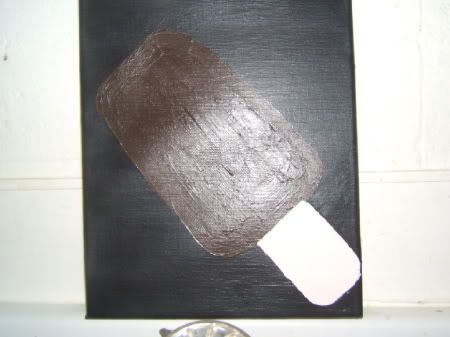
The Turd That Killed Elvis

The Turd That Killed Elvis

From my celebrated and almost universally ignored series of Poopsicle paintings, I humbly present...

The Turd That Killed Elvis

Elvis Presley died at Graceland on August 16, 1977, at the age of 42.

He was found unresponsive on the bathroom floor after apparently having been sitting on the toilet. This unfortunate detail has become such a permanent part of Elvis mythology that, somewhere along the way, the story was simplified into the considerably more memorable version that Elvis died taking a shit.

The actual circumstances were considerably less amusing.

By the final years of his life, Elvis was in terrible health. He suffered from numerous medical problems and was taking an extraordinary assortment of prescription medications. His death was officially attributed to cardiac causes, although the precise contribution of his medications and other health problems has been debated ever since.

There is, however, another particularly unpleasant piece of Elvis lore.

He reportedly suffered from severe chronic constipation and had significant problems with his colon. This has led to speculation that straining during a bowel movement may have contributed to the cardiac event that killed him.

Which means the legendary Turd That Killed Elvis probably didn't actually kill Elvis.

But it may have been present at the scene.

And that's good enough for art.

The Turd That Killed Elvis painting


The Turd That Killed Elvis

From the Poopsicle Series

Other paintings in the Poopsicle series

Vic Tayback Was the Zodiac Killer

Oprah Winfrey's Pussy


.


Pin It

Saturday, March 24, 2012

The Night Is So Still Dolphins Swim Through It

When I was a child in school I never listened. I knew it wasn't the right thing to do, and eventually they just stopped trying to instruct me and gave me a pile of books to read. Even then i sensed there wasn't much reason getting knowledge second or third hand, filtered through the voice of someone who may or may not even understand it. Given math equations, I ignored whatever rules they attempted to teach me and simply proceeded using my own trial and error methods. Which, given time, were eventually successful. Either I ran out of time or I solved the problems. Always my brain has worked that way. Sort of a solipsistic inductive reasoning machine. No point trying to learn the rules of the game at this late date. Why do I tell you this? I don't know. Because there's more afternoon than I need. Well, because I use design programs like Photoshop the same way. I can't ever learn the hard and fast rules, which would no doubt save me a great deal of time. "Dolphins" is a poem I wrote probably in 1996 on a porch on Quincy Ave. It went into my second book, Detached Retinas. Jenny did this Tiny Drawing last month and told me a few nights ago it went with the poem "Dolphins." Then she decided it didn't go with the poem "Dolphins," but I had already decided it had by this point. So, I put together the Tiny Drawing Poem this afternoon using my usual trial and error design method. The font is Flowerchild. 


Pin It

Friday, April 29, 2011

Oprah Winfrey's Pussy

I am now a painter as well as a poet, actor, and America's First and Only Zombie(Z) Party candidate. I painted Oprah Winfrey's Pussy. It took a lot of paint. Want to see Oprah's Pussy? I didn't, but I am the only person on Earth who has. And it looked like this...

Painting of Oprah Winfrey's pussy in acrylic by Thomas L. Vaultonburg from his Poopsicle series
I am the only person on planet Earth known to have seen Oprah Winfrey's Pussy.  I was surprised when she commissioned me to do the portrait. She wants it to be memorialized for future generations so they can remember it as it was.... untouched.


December 12, 2012 update: At one time this was my most popular blog. I actually spent a few days on the texture of this painting. I removed it from my blog but then decided I worked hard on this painting and it should stay. It doesn't get much traffic anymore. 


Ron Jeremy is a Bad Dude

Pin It
Blogger Wordpress Gadgets