Showing posts with label Zombie Logic Blog. Show all posts

Wednesday, October 28, 2026

The Empty Years: What Happened at the Overlook Hotel Between 1936 and 1945?

 By Thomas L. Vaultonburg

The Overlook is never empty.

There is a period in the history of Stephen King's Overlook Hotel that has received surprisingly little attention. Between 1936 and 1945, the enormous resort hotel high in the Colorado Rockies was closed to the public. Nine years passed before millionaire industrialist Horace Derwent acquired the property and began restoring it to its former glory. During those years, America endured the Great Depression, entered the Second World War, and emerged as the most powerful nation on earth. And the Overlook Hotel, a place whose history seems to contain nearly every variety of human corruption and misfortune, apparently sat empty. Or did it?

The Overlook Hotel From The Shining


In King's 1977 novel The Shining, hotel manager Stuart Ullman provides Jack Torrance with a brief history of the property. Built between 1907 and 1909 by Robert Townley Watson, the Overlook was intended to be one of America's great mountain resorts. Its guest list included presidents, industrialists, and members of the country's wealthiest families. But despite its spectacular location and distinguished clientele, the hotel was a financial disaster. It changed hands repeatedly, in 1915, 1922, 1929, and finally 1936. After that last transaction, it remained vacant until the end of World War II. King gives us remarkably little information about those intervening years. No celebrated guests, no notorious murders, no scandals involving organized crime, no mysterious suicides. The Overlook's otherwise extensive history seems to fall silent. For a hotel whose past is so crowded with the dead, nine years of apparent inactivity represents a considerable omission.

It is tempting to treat this as nothing more than an incidental detail. King needed the hotel to have a long and troubled history, and an extended closure during the Depression and war years would hardly have seemed unusual. Luxury resorts were particularly vulnerable to economic collapse. An isolated mountain hotel that had never consistently turned a profit might reasonably have been abandoned until a wealthy investor could afford to restore it. But the Overlook is not an ordinary hotel, and The Shining is not an ordinary ghost story.

The Hotel That Remembers Everything

One of the novel's most important sequences occurs when Jack Torrance discovers a collection of old records in the hotel's basement. Among the invoices, ledgers, and newspaper clippings is a scrapbook containing evidence of the Overlook's disreputable history. Jack becomes fascinated by the material, gradually abandoning his own writing project in favor of investigating the hotel. The scrapbook is more than a convenient method of supplying background information. It is one of the mechanisms through which the Overlook begins to possess Jack. The hotel offers him something he desperately wants: a story worth telling, a history that might finally make him an important writer. The deeper he investigates, the more thoroughly he identifies himself with the institution whose secrets he hopes to expose.

And the Overlook has secrets worth exposing. Its history includes suspicious deaths, organized crime, financial manipulation, sexual exploitation, and powerful men who seem able to escape the consequences of their behavior. It is a monument to the peculiar American ability to disguise corruption as success. Its grand public rooms and luxurious accommodations conceal a history of brutality and humiliation. The hotel's archives document much of this activity. Yet the period when the property was closed remains conspicuously thin. King has constructed a supernatural institution that appears capable of remembering everything, and then placed a nine-year silence near the middle of its history. What does a haunted hotel remember about the years when nobody was supposed to be there?

The Depression Comes to the Overlook

Consider the circumstances of the hotel's closure in 1936. The United States was still struggling through the Great Depression. Unemployment remained devastatingly high, banks and businesses had failed, and the extravagant culture of the 1920s had become a bitter memory for millions of Americans. The Overlook, conceived during an earlier era of spectacular private wealth, must have seemed increasingly absurd. Imagine the practical business of closing such a place. Furniture covered with sheets. Dining rooms emptied. Beds stripped of their linens. The great kitchen cleaned and shut down. Water drained from pipes that might freeze during the Colorado winter. The last employees collecting their wages and descending the mountain road toward Sidewinder.

There is something profoundly unsettling about the idea of an enormous luxury hotel being prepared for an absence of indefinite duration. Hotels are buildings designed around temporary human occupation. Every room anticipates an arrival, every corridor leads somewhere, every service exists to accommodate the needs of people who are expected to leave. Remove the guests and employees, and what remains? A hundred and ten empty rooms, each containing the physical arrangements of hospitality without the people those arrangements were intended to serve. Beds that will not be slept in. Mirrors that will reflect no living faces. A ballroom waiting for music that may never return.

Yet King's Overlook has already established that human presence is not necessarily required for activity. The hotel retains impressions of its former occupants. Time does not operate normally within its walls. Events that occurred decades earlier can reappear with a vividness that suggests they never truly ended. If the Overlook was already haunted in 1936, closing the hotel would not necessarily have made it quiet. It might simply have removed the living audience.

Nine Years Without Witnesses

The most intriguing possibility is not that some spectacular undiscovered atrocity occurred during the missing years. It is that nothing new needed to happen. We tend to imagine haunted houses as places where the dead wait for the living to return. But that assumes the living are the central participants in the haunting. What if the supernatural activity continues independently of human observation? What if the ballroom remains crowded on certain nights, the elevators move between floors, and the voices of former guests echo through the corridors whether anyone is present to hear them or not?

King's novel suggests that the Overlook possesses something resembling a collective consciousness. Its ghosts are not merely isolated spirits carrying out private routines. They participate in a larger supernatural enterprise, one that ultimately seeks to absorb Danny Torrance's extraordinary psychic abilities. The hotel does not simply contain evil. It organizes and perpetuates it. That distinction changes the meaning of the empty years. A building that is merely haunted might fall dormant when abandoned. A building that functions as an independent supernatural organism might continue developing, accumulating power or rehearsing its old ceremonies without any assistance from the living. Perhaps the Overlook did not need guests between 1936 and 1945. Perhaps the people who had already passed through its doors were sufficient.

This is speculation, of course. King never tells us what supernatural activity, if any, occurred during the closure. But the possibility arises naturally from the rules he establishes elsewhere in the novel. And it raises a question that is rarely asked about haunted places: If nobody is there to witness a haunting, does the haunting still happen?

Horace Derwent and the Resurrection of the Overlook

On August 29, 1945, Horace Derwent celebrated the Overlook's grand opening with an elaborate masked ball. The invitation discovered by Jack Torrance announces dinner at eight, followed by unmasking and dancing at midnight. The date is significant. Japan had announced its surrender earlier that month, and the formal surrender ceremony would take place just days later. The Second World War was ending, and the United States was entering a period of extraordinary economic and political ascendancy. Derwent's celebration belongs to that historical moment. The old hotel, abandoned during the Depression, was being reborn as a playground for the wealthy and powerful. Money had restored what money had previously failed to sustain.

But Derwent is hardly an innocent benefactor. His history includes connections to organized crime, and the hotel's subsequent years are marked by scandals and violence. The grand reopening is less a moral renewal than the beginning of another chapter in the Overlook's continuing corruption. The masked ball becomes one of the novel's central supernatural images. Its participants remain associated with the hotel long after the original celebration, and the command to remove their masks takes on an increasingly sinister significance. There is an obvious irony in a celebration of unmasking held at an institution built upon concealment. The Overlook's public identity is that of an elegant resort. Its private history is something else entirely. Derwent's arrival also raises an interesting question about the nine years preceding it. Did his money restore the hotel to life, or did it merely provide the Overlook with a new population of victims and collaborators? Perhaps the hotel had been waiting for someone like him.

The Overlook as an American Institution

One of the reasons The Shining remains so disturbing is that its supernatural horrors are inseparable from recognizable forms of human behavior. Jack Torrance is not simply attacked by ghosts. His alcoholism, resentment, frustrated ambition, and capacity for violence are exploited by an institution that understands how to turn human weakness toward its own purposes. The same principle operates on a larger scale in the hotel's history. Wealthy and influential men pass through the Overlook, leaving behind evidence of greed, exploitation, and violence. Ownership changes, management changes, and the public presentation of the property changes. But the underlying character of the place remains remarkably consistent.

This makes the nine-year closure interesting for reasons extending beyond supernatural speculation. Institutions can survive periods of apparent inactivity. Their buildings may be abandoned, their records placed in storage, and their operations suspended. Yet the ideas, relationships, and arrangements that sustained them can persist. The Overlook's history resembles that of an American institution whose public scandals never quite destroy it. Every new owner promises improvement. Every renovation conceals the deterioration beneath it. The building survives because enough powerful people find reasons to preserve it. The hotel is not evil because one terrible thing happened there. It is evil because terrible things happened there repeatedly, and the machinery that made them possible was never dismantled.

Seen this way, the closure from 1936 to 1945 is less a break in the Overlook's history than a temporary interruption in its public operations. The building remains. The history remains. Whatever has accumulated inside it remains. And eventually someone opens the doors again.

What Stephen King Leaves Unsaid

It would be a mistake to insist that King deliberately constructed an elaborate mystery around the hotel's missing years. The simplest explanation remains entirely plausible: the Overlook closed because it was an unprofitable luxury resort during an economic catastrophe, and it reopened when a wealthy entrepreneur decided to revive it. But literary fiction often becomes more interesting in the spaces its author leaves unexplored. The Overlook's history is so densely populated with memorable incidents that its extended silence becomes suggestive in retrospect.

King could have filled those years with another murder, another scandal, another supernatural catastrophe. Instead, the record gives us a vacancy. There is something almost elegant about that absence. The hotel spends nine years outside the ordinary flow of human commerce and social life. America changes around it. Governments rise and fall. Millions die in a world war. The country that abandoned the Overlook in 1936 is not quite the same country that returns to it in 1945. But the hotel is still there. Its corridors remain. Its rooms remain. The mountains remain. And whatever the Overlook has become through the accumulation of its own history is waiting behind the locked doors.

We may never know what happened during those nine years. Perhaps nothing happened that a living person would recognize as an event. Perhaps the building settled beneath the snow, the windows darkened, and the wind moved through the empty grounds. Or perhaps the ballroom was full every night. The most frightening possibility is that both descriptions could be true.

The Overlook is never empty.

Thomas L. Vaultonburg writes about horror films, literature, and the strange corners of American popular culture for Zombie Logic Blog.

Pin It

Wednesday, October 21, 2026

Ghouls, Ghouls, Ghouls! The Terrifying History of the Graveyard's Most Unwelcome Guests

Ghouls, Ghouls, Ghouls! The Terrifying History of the Graveyard's Most Unwelcome Guests

31 Days of the Living Dead — Zombie Logic Blog

There are few creatures in the history of supernatural horror that have suffered a greater loss of professional distinction than the ghoul. Once a terrifying shapeshifting demon of the Arabian wilderness, capable of assuming human form, misleading travelers, and consuming the unfortunate people who wandered into its territory, the ghoul has gradually been demoted to something resembling a particularly unpleasant cemetery maintenance worker. In contemporary horror, it is frequently portrayed as a filthy, emaciated humanoid that crawls around graveyards eating corpses. It has little personality, fewer ambitions, and an apparent inability to find a more socially acceptable source of nutrition. Yet the history of the ghoul is considerably more complicated than its modern reputation suggests. The creature has traveled through pre-Islamic Arabian folklore, medieval literature, European translations of The Thousand and One Nights, Gothic fiction, American pulp magazines, Hollywood horror films, and eventually the modern zombie apocalypse. Along the way, it has changed its appearance, habits, and even its relationship to death itself.

A Village of Ghouls in The Monster Club

My favorite ghouls from The Monster Club

What makes the ghoul particularly interesting is that it occupies an uncomfortable position between several categories of supernatural creature. It is not necessarily a ghost, because it may possess a physical body. It is not necessarily a zombie, because it may never have been human. It is not exactly a vampire, although it shares the vampire's appetite for human bodies and its association with graveyards. And unlike the werewolf, which generally suffers from a recognizable transformation, the traditional ghoul may change its appearance whenever doing so helps it acquire another victim. It is a predator, a deceiver, a cannibal, and sometimes a supernatural scavenger. The modern tendency to reduce it to a corpse-eating monster has obscured one of the most versatile and unsettling creatures in the entire history of folklore.

The Ghoul Before the Graveyard

The English word ghoul derives from the Arabic ghūl, a term associated with a dangerous supernatural being in traditions that predate Islam. In early Arabic folklore, ghouls were commonly associated with the jinn, a broad category of supernatural beings possessing powers and characteristics quite different from those of human beings. The ghoul was especially feared in remote places, including deserts, wildernesses, and lonely roads where travelers might become lost or separated from their companions. In some traditions, the creature could assume different appearances, including those of animals or human beings, allowing it to deceive its victims before attacking them.

This original setting is important because the ghoul was not initially confined to the cemetery. Its natural environment was the dangerous landscape beyond the security of human settlements. For travelers crossing enormous stretches of desert, the possibility of becoming lost was not merely inconvenient. It could mean death from thirst, exposure, or exhaustion. The ghoul gave supernatural form to the fear that something might deliberately lead a person away from safety. Some accounts describe ghouls creating deceptive lights or adopting enticing appearances to lure travelers into dangerous territory. Others emphasize their extraordinary ugliness, monstrous anatomy, or ability to change shape. The details varied, but the underlying danger remained consistent. A person who encountered a ghoul might discover too late that the apparently helpful stranger standing in the wilderness was not a person at all.

Ghoul- Dungeons and Dragons First Edition Version

Ghoul- Dungeons and Dragons First Edition Version

The creature also appears in Persian and broader Middle Eastern traditions, where its characteristics sometimes overlap with those of other demons, ogres, and supernatural predators. The scholar Ahmed Al-Rawi, in his studies of the Arabic ghoul and its transformation in Western literature, has emphasized the importance of distinguishing the older desert-dwelling figure from the graveyard scavenger familiar to modern English-speaking audiences. The ghoul's history is not the history of a single unchanging monster. It is the history of a supernatural concept repeatedly adapted to the fears and expectations of different cultures.

The Shapeshifter in the Desert

One of the most disturbing aspects of the traditional ghoul is its capacity for deception. Modern monsters frequently announce themselves through their appearance. A werewolf resembles a wolf. A vampire generally possesses recognizable fangs. A zombie is identified by its decomposition, behavior, or insatiable appetite for living flesh. The ghoul, however, could be dangerous precisely because it did not always look like a monster. It might appear as a woman, an animal, or another seemingly ordinary figure encountered in an extraordinary location. The traveler who approached it might believe he had found assistance, companionship, or shelter. By the time the deception became apparent, escape might no longer be possible.

Some traditional descriptions associate the ghoul with distinctive physical features that betray its supernatural nature, including animal-like hooves or malformed limbs. The creature's ability to change its appearance was therefore not always perfect. In certain accounts, an observant traveler might recognize the deception before becoming another meal. This detail gives the ghoul something in common with supernatural beings found in many cultures: the monster that can imitate humanity but cannot entirely conceal its difference. The horror depends upon the uncertainty of appearances. What seems familiar may be dangerous, and what seems helpful may be waiting for an opportunity to consume you.

The ghoul was also associated with a kind of predatory intelligence largely absent from its later cinematic descendants. It did not merely stumble upon victims. It sought them out, manipulated their perceptions, and exploited their vulnerabilities. A traveler alone in the wilderness was not simply an available source of food. He was someone whose fear, exhaustion, or desperation could be turned against him. The ghoul understood that human beings are most susceptible to deception when they desperately need to believe that help has arrived.

The Arabian Nights and the Birth of the European Ghoul

The ghoul entered European literary consciousness largely through translations and adaptations of The Thousand and One Nights, often known in English as The Arabian Nights. Beginning in the early eighteenth century, the French translator Antoine Galland introduced European readers to stories that would have an enormous influence on Western ideas about the supernatural East. His translation was not simply a mechanical reproduction of a fixed Arabic text. It incorporated stories acquired through different sources, including oral storytelling, and helped establish a European literary image of the ghoul that would endure for centuries.

Among the most influential episodes is the story of Sidi Nouman, whose wife Amina secretly visits a cemetery and participates in the consumption of a recently buried corpse. The revelation of her horrifying appetite transforms what initially appears to be a domestic mystery into an encounter with supernatural cannibalism. The story helped establish the ghoul's association with graveyards and the eating of the dead in European popular imagination. The cemetery gradually became the creature's preferred residence, and the consumption of corpses became its most recognizable activity.

This transformation was enormously consequential. The original desert predator, whose principal danger lay in its ability to deceive and destroy the living, became increasingly identified with the desecration of the dead. The graveyard provided a particularly effective Gothic setting because it was already associated with mortality, decay, forbidden knowledge, and the unsettling possibility that the dead might not remain undisturbed. A monster that consumed corpses violated the expectation that burial offered some final protection from the appetites of the living world. The dead were supposed to be finished with earthly suffering. The ghoul suggested that even death might not be sufficient to escape becoming someone else's dinner.

The Ghoul Enters Gothic Literature

By the nineteenth century, the ghoul had become a useful addition to the vocabulary of Gothic horror. Writers could invoke the creature to suggest grave robbery, cannibalism, supernatural depravity, or a fascination with death that exceeded ordinary human curiosity. The word itself acquired a secondary meaning that remains common today. A person who displayed an unhealthy interest in death, suffering, or the misfortunes of others might be described as ghoulish, even without any suggestion of literal cannibalism. The monster had become an adjective, and its moral implications were now available to describe human behavior.

Edgar Allan Poe's fiction helped establish the atmosphere in which such creatures could flourish, even though his most famous stories were not straightforward ghoul narratives. His fascination with premature burial, bodily decay, psychological obsession, and the unstable boundary between life and death belonged to the same expanding Gothic imagination. Later writers developed more explicit graveyard horrors, including stories in which the consumption or disturbance of human remains became central to the narrative.

H. P. Lovecraft gave the ghoul one of its most influential modern literary incarnations. In Pickman's Model (1927), the narrator discovers that the horrifying paintings of an apparently deranged artist may depict actual creatures rather than products of imagination. Lovecraft's ghouls are grotesque, doglike humanoids associated with graveyards, subterranean passages, and the consumption of human corpses. The story's central revelation is not simply that monsters exist, but that an artist has been documenting them from life. The paintings are horrifying because they are accurate.

Lovecraft returned to ghouls in The Dream-Quest of Unknown Kadath, where they occupy a more elaborate place within his dream-world mythology. Here the creatures possess social relationships, language, and recognizable personalities. They are no longer merely anonymous corpse-eaters. They form a strange society existing alongside, and sometimes beneath, the human world. Lovecraft's interpretation helped establish the ghoul as a physically distinctive underground creature with its own ecology, habits, and civilization. The influence of this conception can be seen in subsequent horror fiction, fantasy role-playing games, and supernatural entertainment.

The Graveyard as a Dining Room

The association between ghouls and cemeteries is particularly effective because it introduces an additional violation into an environment already organized around the management of death. Cemeteries are places where human beings attempt to impose order, dignity, and continuity upon the unavoidable fact of mortality. Graves are marked. Bodies are buried. Names and dates are preserved. Families return to remember the dead, and communities maintain rituals intended to distinguish the living from those who have departed. The ghoul ignores all of these arrangements. To the creature, a cemetery is not sacred ground. It is a pantry.

There is something almost offensively practical about this arrangement. The ghoul has no interest in the deceased person's accomplishments, relationships, religious beliefs, or social position. It is indifferent to the expense of the funeral and the sincerity of the mourners. It recognizes only the presence of edible material beneath the ground. This is one reason the creature can be simultaneously horrifying and grotesquely comic. Its behavior reduces elaborate human ceremonies to a problem of food storage. The expensive coffin, the marble monument, and the carefully maintained cemetery plot are simply obstacles between the ghoul and its next meal.

Unlike the vampire, whose relationship with its victims often involves seduction, domination, or the transmission of supernatural power, the graveyard ghoul may have no interest in the living whatsoever. Its appetites are directed toward people who can no longer object. This gives the creature a peculiarly parasitic relationship with human civilization. It depends upon the dead produced by society while remaining outside society's moral obligations. It is not interested in conquest or revenge. It simply waits for the next funeral.

George Romero's Ghouls and the Birth of the Modern Zombie

One of the most surprising developments in the history of the ghoul occurred in 1968, when George A. Romero released Night of the Living Dead. The film would become the foundation of modern zombie cinema, establishing many of the conventions that audiences now take for granted: reanimated corpses, attacks upon the living, cannibalistic feeding, barricaded survivors, and the collapse of social order. Yet Romero's creatures were not consistently identified as zombies within the original film. Contemporary descriptions and discussions of the production frequently referred to them as ghouls.

This distinction is more than a curiosity of horror terminology. Before Romero, the cinematic zombie was strongly associated with Haitian Vodou traditions as interpreted and frequently distorted by American popular culture. Films such as White Zombie (1932) portrayed zombies as human beings deprived of their independent will and controlled by another person. Romero's monsters were fundamentally different. They were dead people who returned to life and consumed the living, functioning as an expanding collective threat rather than servants of a supernatural master. Their behavior had considerably more in common with the flesh-eating ghoul of Western horror literature than with the controlled laborers of earlier zombie films.

The distinction eventually disappeared from popular consciousness as Romero's creatures became the dominant model for cinematic zombies. The success of Night of the Living Dead and its successors helped redefine the word zombie itself. What had once described one kind of supernatural condition became almost synonymous with the ravenous walking dead. The ghoul had effectively contributed its appetite to the zombie and then watched the zombie become vastly more famous.

There is something wonderfully ironic about this development. One of the most influential monsters in modern popular culture inherited a significant part of its identity from another creature whose name gradually faded into the background. The zombie became the international celebrity. The ghoul returned to the cemetery.

Ghouls in Modern Horror Cinema

Although the ghoul has never achieved the cinematic prominence of vampires, werewolves, or zombies, its influence can be found throughout modern horror. Tobe Hooper's The Funhouse (1981), while not a traditional ghoul film, employs the imagery of grotesque hidden humanity and predatory appetite that belongs to the same family of horror. More direct examples include The Ghoul (1933), starring Boris Karloff, in which Egyptian supernatural imagery, burial rituals, and revenge are combined into a Gothic mystery. The film demonstrates how loosely Hollywood was already willing to employ the word ghoul. The title promised something associated with death and the supernatural, but the creature itself did not necessarily conform to the older Arabian tradition.

British horror also made extensive use of ghoulish imagery, particularly through stories involving grave robbers, resurrectionists, cannibals, and people whose fascination with corpses crossed the boundaries of ordinary human behavior. The term could describe a literal supernatural creature or an especially unpleasant human being. This flexibility helped keep the ghoul alive as a concept even when filmmakers were not interested in presenting an actual folkloric monster.

One particularly memorable modern interpretation appears in the 2015 film Ghoul, directed by Petr Jákl, which uses a found-footage framework and draws upon the historical figure of Andrei Chikatilo. Its relationship to traditional Arabic folklore is distant, but its use of the ghoul concept illustrates how the term has become a broad designation for supernatural or psychologically disturbing forms of cannibalistic horror. The ghoul has become so adaptable that its name can be attached to nearly any story involving human flesh, monstrous appetite, and the violation of bodily boundaries.

The Ghoul in Games and Popular Culture

Video games and fantasy role-playing systems have given the ghoul an entirely new existence. In Dungeons & Dragons, ghouls are undead creatures capable of paralyzing their victims, often depicted as emaciated humanoids with claws and an appetite for flesh. Their appearance and behavior reflect the influence of Western horror literature more than the shapeshifting desert spirits of early Arabic folklore. The ghoul has become a standardized adversary, complete with abilities, vulnerabilities, and a recognizable place within a supernatural hierarchy.

The Fallout video game series offers a substantially different interpretation. Its ghouls are human beings transformed by radiation, often retaining intelligence, memories, and personalities despite severe physical disfigurement. Some eventually become feral, losing much of their capacity for recognizable human behavior. This distinction creates opportunities for stories about prejudice, identity, survival, and the relationship between physical appearance and humanity. A creature whose name once identified a supernatural predator becomes a means of asking whether a visibly monstrous person might remain fundamentally human.

Japanese popular culture has also embraced the ghoul, most notably through Tokyo Ghoul, the manga and anime series in which beings resembling human beings must consume human flesh to survive. The premise transforms the ghoul's appetite into a source of existential conflict. The central characters must negotiate the contradiction between their biological needs and their emotional connections to humanity. Once again, the creature's relationship to consumption becomes the defining problem, although the setting and mythology have changed almost beyond recognition.

These modern versions demonstrate the extraordinary flexibility of the ghoul. It can be an undead cemetery scavenger, a radiation survivor, a secret cannibal living among human beings, or a supernatural predator hiding beneath the streets. Its precise appearance is less important than the disturbing question it raises about the boundary between human beings and the things that consume them.

The Ghoul, the Vampire, and the Zombie

The ghoul's relationship with other monsters is worth examining because it occupies a peculiar position within the supernatural food chain. The vampire feeds upon the living, traditionally consuming blood and sometimes transmitting its condition to victims. The zombie, in its modern cinematic form, attacks living human beings and may spread its condition through bites or infection. The ghoul, depending upon the tradition, may consume the living, the dead, or both. Its identity is therefore less dependent upon a particular method of reproduction or transformation than upon the act of consumption itself.

The vampire often represents an unnatural continuation of life, maintaining intelligence and personality while surviving through the exploitation of others. The zombie represents the destruction of individuality and the transformation of human beings into an anonymous consuming mass. The ghoul, particularly in its graveyard incarnation, represents the violation of death as a final boundary. It reminds us that the human body remains vulnerable even after the person who inhabited it has disappeared. Burial may protect the dignity of the dead in human society, but it offers no guarantee against creatures that refuse to recognize human distinctions between sacred and profane.

There is also a difference in the emotional responses these monsters inspire. Vampires can be seductive. Zombies can be tragic. Werewolves can be sympathetic because their transformations are often involuntary. Ghouls are rarely afforded the same romantic possibilities. Their association with decomposition, scavenging, and grave desecration makes them difficult to rehabilitate into attractive supernatural protagonists, although contemporary fiction has certainly attempted it. The ghoul remains stubbornly unpleasant, and perhaps that is one reason it has never been fully domesticated by popular entertainment.

Why We Fear the Things That Eat the Dead

The fear of ghouls belongs to a much larger human anxiety about what happens to our bodies after death. Across cultures and historical periods, people have developed elaborate practices intended to protect, preserve, conceal, or ritually transform human remains. These practices vary enormously, but they frequently express a shared recognition that the dead body is not merely an object. It retains social, emotional, and symbolic importance because of the person who once inhabited it.

The ghoul rejects that distinction. It treats the body as available material, something to be consumed without permission or ceremony. The horror arises not only from the act of eating human flesh but from the complete indifference with which the creature approaches it. A ghoul does not need to hate its victims. It does not need to know who they were. It does not need to recognize that they were ever alive. Their individuality is irrelevant to its appetite.

This indifference is what makes the ghoul such an effective monster. It represents the possibility that the meanings human beings attach to themselves might disappear entirely when confronted by a sufficiently powerful appetite. The body that once housed memories, relationships, ambitions, and emotions becomes indistinguishable from any other available source of nourishment. Everything that made a person unique is reduced to something that can be eaten.

Ghouls, Ghouls, Ghouls!

The ghoul has survived for centuries because it can be reinvented almost indefinitely without losing its essential capacity to disturb us. It began as a dangerous supernatural presence in the wilderness, a shapeshifter that preyed upon isolated travelers and exploited the uncertainty of appearances. It entered European literature through translations of Arabian stories and acquired a lasting association with graveyards and the consumption of corpses. Gothic writers transformed it into an inhabitant of subterranean worlds and forbidden places. Hollywood borrowed its name for everything from supernatural revenge stories to cannibalistic horrors. George Romero's flesh-eating dead helped transfer much of its identity into the modern zombie, while video games and contemporary fiction continued to invent new varieties.

Through all these transformations, the ghoul has remained associated with a fundamental violation of human expectations. We expect the living to respect the dead. We expect a human appearance to indicate something recognizable beneath it. We expect death to bring an end to the ordinary appetites of the body. The ghoul undermines every one of these assumptions. It can look like a person without being one. It can inhabit a graveyard without respecting the dead. It can turn the final resting place into a feeding ground.

And perhaps this is the ghoul's greatest achievement as a monster. It does not require an elaborate supernatural philosophy, an ancient curse, or an apocalyptic catastrophe to become frightening. It needs only a cemetery, a freshly dug grave, and the possibility that something is waiting beneath the ground for the mourners to leave.

The vampire wants your blood. The werewolf wants to tear you apart. The zombie wants to eat you while you're still alive.

The ghoul is perfectly willing to wait.

Pin It

Saturday, June 28, 2014

My Angiogram Scar Totally Looks Like a Penis and Testicles

I'm going to write a paragraph or two here so the first thing you don't see is a picture of my hairy groin. After my surgery they basically had to perform a smaller surgery to remove all the tubes and needles that were in my body. These were significant tubes. However, it wasn't for two days that I saw the scar on my thigh. It was a thing of true ugliness. This was from the angiogram tube they basically use like a roto rooter tool. 

After all my scars started to heal a little bit I started to notice this one was taking a very clear for. The form of something it was very close to. I should have shaved so you can see that it looks exactly like a penis and set of testicles. 

I wasn't going to do this blog because despite what it might seem like I have some standards of decorum. But I have a scar that looks like a dick and balls on my leg, what am I going to do, not blog about it? You were warned.


My angiogram scar that looks like a penis and testicles

Pin It

Wednesday, October 10, 2012

Johnny Wockenfuss: The Funniest Name In Baseball History

Johnny Wockenfuss: The Funniest Name in Baseball

Baseball has a long and distinguished history of names that sound like they were invented by twelve-year-old boys.

Pete LaCock.

Rusty Kuntz.

Dick Pole.

Johnny Dickshot.

Ed Head.

There are objectively strong candidates here. Johnny Dickshot in particular should probably be unbeatable.

And yet, for me, the funniest baseball name of all time remains:

Johnny Wockenfuss.

1978 Topps baseball card Johnny Wockenfuss


Johnny Wockenfuss shouldn't be funnier to me than Johnny Dickshot.

But he is.

Maybe it's because Wockenfuss is such an unusually satisfying word to say. It doesn't even require embellishment. Johnny Wockenfuss. Say it three times and eventually you're going to smile.

The wonderful thing is that John Wockenfuss was considerably more interesting than his name.

He spent twelve seasons in the major leagues from 1974 through 1985, ten of them with the Detroit Tigers. He was one of those extremely useful baseball players who never became a superstar but could be put almost anywhere. Wockenfuss caught, played first base and the outfield, served as a designated hitter and pinch hitter, and even appeared at third.

And then there was his batting stance.

Wockenfuss stood at the plate so closed that his back was almost facing the pitcher. He held the bat high, looked back toward the mound over his shoulder and wiggled his fingers on the handle while waiting for the pitch.

It looked ridiculous.

Apparently it also worked.

His best season came in 1980, when he played 126 games for Detroit, hit 16 home runs, drove in 65 runs and posted a .390 on-base percentage.

There is also one painful bit of Detroit Tigers history attached to Wockenfuss. Just before the 1984 season, Detroit traded him and Glenn Wilson to the Philadelphia Phillies for Dave Bergman and Willie Hernández.

Hernández proceeded to win both the American League Cy Young Award and Most Valuable Player Award while helping the Tigers win the 1984 World Series.

Wockenfuss missed the championship.

He played two seasons with Philadelphia before his major-league career ended, and later returned to baseball as a minor-league manager and coach.

John Wockenfuss died in 2022 at the age of 73.

So yes, I originally came here because I thought Johnny Wockenfuss was the funniest name in baseball.

I still do.

But he was also exactly the kind of player who makes baseball history more interesting: strange batting stance, funny name, multiple positions, twelve years in the majors, and one enormous trade connecting him permanently to one of the great Detroit Tigers teams.

Still...

Wockenfuss.


Pin It

Monday, August 20, 2012

The Turd That Killed Elvis

The Turd That Killed Elvis

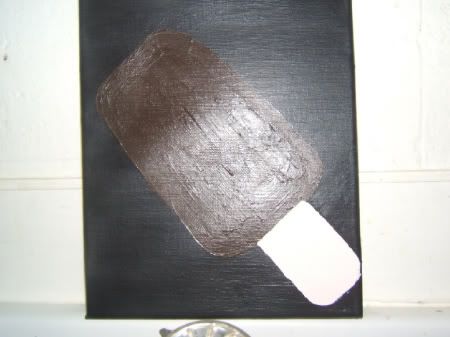
From my celebrated and almost universally ignored series of Poopsicle paintings, I humbly present...

The Turd That Killed Elvis

Elvis Presley died at Graceland on August 16, 1977, at the age of 42.

He was found unresponsive on the bathroom floor after apparently having been sitting on the toilet. This unfortunate detail has become such a permanent part of Elvis mythology that, somewhere along the way, the story was simplified into the considerably more memorable version that Elvis died taking a shit.

The actual circumstances were considerably less amusing.

By the final years of his life, Elvis was in terrible health. He suffered from numerous medical problems and was taking an extraordinary assortment of prescription medications. His death was officially attributed to cardiac causes, although the precise contribution of his medications and other health problems has been debated ever since.

There is, however, another particularly unpleasant piece of Elvis lore.

He reportedly suffered from severe chronic constipation and had significant problems with his colon. This has led to speculation that straining during a bowel movement may have contributed to the cardiac event that killed him.

Which means the legendary Turd That Killed Elvis probably didn't actually kill Elvis.

But it may have been present at the scene.

And that's good enough for art.

The Turd That Killed Elvis painting


The Turd That Killed Elvis

From the Poopsicle Series

Other paintings in the Poopsicle series

Vic Tayback Was the Zodiac Killer

Oprah Winfrey's Pussy


.


Pin It

Friday, April 29, 2011

Oprah Winfrey's Pussy

I am now a painter as well as a poet, actor, and America's First and Only Zombie(Z) Party candidate. I painted Oprah Winfrey's Pussy. It took a lot of paint. Want to see Oprah's Pussy? I didn't, but I am the only person on Earth who has. And it looked like this...

Painting of Oprah Winfrey's pussy in acrylic by Thomas L. Vaultonburg from his Poopsicle series
I am the only person on planet Earth known to have seen Oprah Winfrey's Pussy.  I was surprised when she commissioned me to do the portrait. She wants it to be memorialized for future generations so they can remember it as it was.... untouched.


December 12, 2012 update: At one time this was my most popular blog. I actually spent a few days on the texture of this painting. I removed it from my blog but then decided I worked hard on this painting and it should stay. It doesn't get much traffic anymore. 


Ron Jeremy is a Bad Dude

Pin It

Thursday, October 29, 2009

First Annual Spooktacular Poetry Blog

My first ever Spooktacular poetry blog. 


Vampyre

Who's vein will my fetid fang
Flay this night and let flow
The scarlet scroll that feeds
My perfidious thirst?

What trick in my trove
Or treat of the flesh
Will she trade for
That heartbeat brief
Flight into fancy
And aeon's Fall
Into damnation?


Zombie

with your brains
in my brawn
we're unstoppable


Wolfman

being a Wolfman is
tear tear tear
terrific.


December 12, 2012 update: No Halloween poems this year. We took Jack and Ella out in our neighborhood. Jack insisted on being pulled in the wagon. We went as a Wolf Pack. Jack caught on quickly and everyone in the Edgewater neighborhood said it was the most trick-or-treaters they had seen in forever. 

Owwwwoooooowwwoooo


Pin It
Blogger Wordpress Gadgets